
Ecommerce SEO Services
HYER Studios is an ecommerce SEO agency in San Diego, working with stores across the US. We fix what stops Google reading your catalog, then improve the pages that sell.
- Frends Beauty: sales up 252% in 12 months
- No twelve-month contracts
- Updated October 2026
Get a Quote
Get a Quote
What is ecommerce SEO?
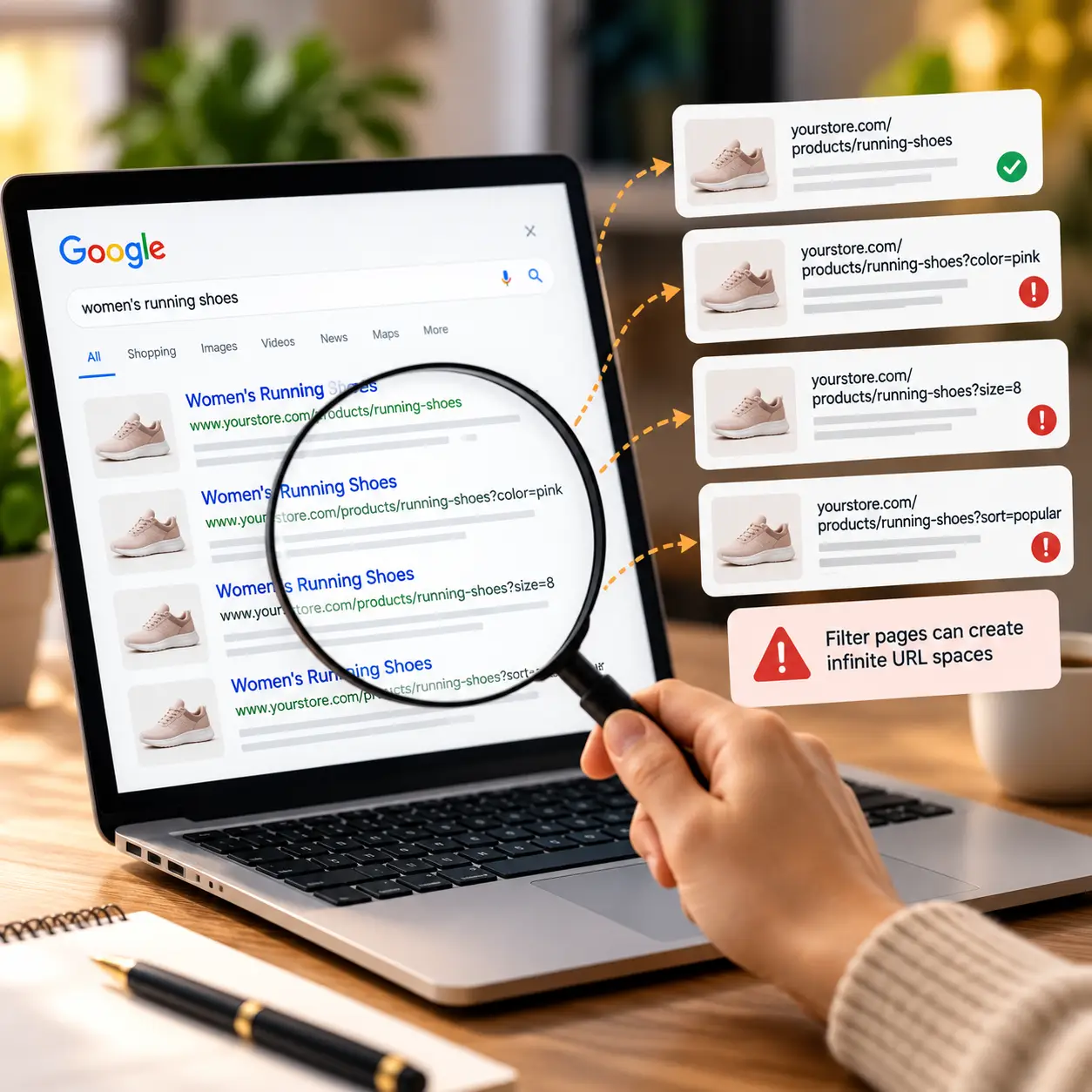
A service business has a handful of pages to rank. A store has hundreds or thousands, many of them nearly identical, and Google has to make sense of all of them. Google’s own ecommerce guides start from that problem: share your product data, structure your page addresses, and help Google see how the catalog fits together.
This is part of our SEO services, built for stores on Shopify and WooCommerce, and for stores planning a move off Magento.
What do our ecommerce SEO services include?
Category and collection pages
Ecommerce category pages catch broad searches: clear titles, a useful intro, and internal linking to the products that sell.
Product pages
Product titles and product descriptions written for the way people search for that product, not copied from the supplier.
Product data in Google
Structured data and Merchant Center product data, so price, stock and ratings can show in the results.
Filters and variants
Faceted navigation that doesn't spawn endless page versions, and variants Google can tell apart.
Site speed
Themes and apps checked against Google's Core Web Vitals, because shoppers leave slow product pages.
Buying-question content
Guides and comparisons that answer what shoppers ask before they buy, linked to the products they lead to.
Link building and digital PR
Links earned from publishers your customers already read, through digital PR and guides worth citing.
AI search
Google says AI Overviews and AI Mode need no special optimization beyond SEO fundamentals, so pages are structured for AI assistants to lift the answer.
Platform moves
Magento to Shopify migration and other moves, with every old address redirected so the traffic follows.
Where does ecommerce SEO usually break?
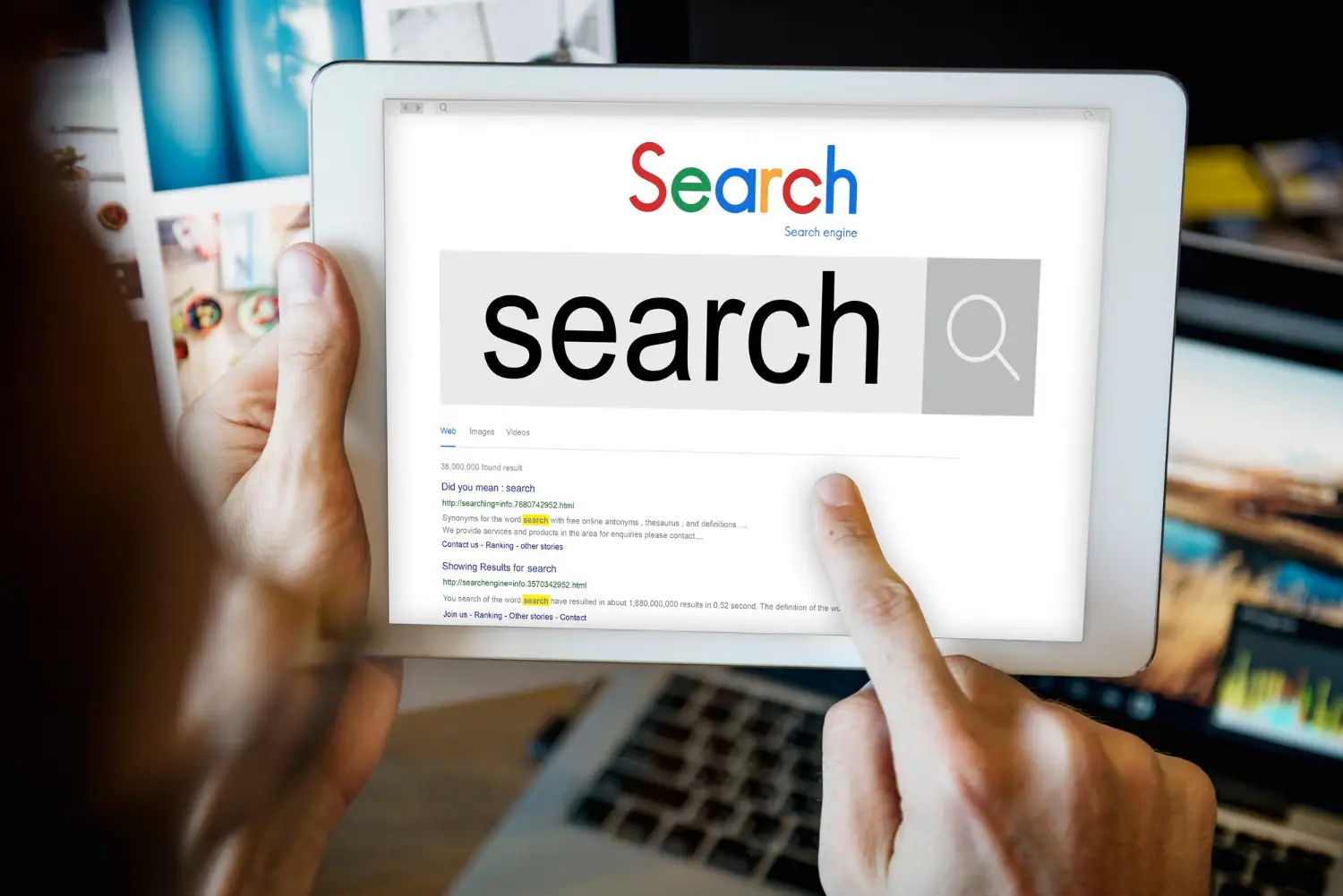
In the parts of a store that multiply: filters, variants and products listed in more than one place. Google warns that filter pages can create infinite URL spaces, so it spends time on useless versions and finds new products later.
Filters
Every color, size and price filter can create a new address for the same list of products. We keep the useful ones findable and stop the rest from soaking up Google's attention.
Variants
Google recommends giving each size or color its own address, with the main product address marked as the preferred one.
One product, many addresses
A product that sits in three collections can be reachable at three addresses, and Google needs to know which one is the real page.
Heavy themes and apps
Every app adds code to product pages, so we check what each one costs in speed before deciding what stays.
Ecommerce technical SEO comes first
How does Shopify SEO work?
Shopify handles the plumbing: its default robots.txt file works for most stores and it builds your sitemap automatically. What it leaves to you is everything that decides rankings: titles and descriptions, collection content, product data, speed and the links between pages.
| AREA | SHOPIFY HANDLES | LEFT TO YOU |
|---|---|---|
| Robots file | A default file that works for most stores | Changes only when there is a clear reason |
| Sitemap | Built automatically: products, collections, pages, blog posts | Making sure the pages in it deserve to rank |
| Page addresses | Fixed /products/ and /collections/ paths | Clear handles and redirects when anything moves |
| Titles and descriptions | A field on every product and collection | Writing them for how people actually search |
| Speed | Hosting and the checkout | Theme weight and the apps you add |
| Product data | Depends on your theme | Checking what the theme outputs, and filling the gaps |
Shopify fixes its product and collection paths, so page addresses are mostly about clear handles and keeping redirects in order. We also build on Shopify and WordPress, so theme changes are made by the website development team that plans them.

How do your products show price and stock in Google results?
Through product data Google can read. Google says product structured data lets shoppers see price, availability, review ratings, shipping information and more right in the search results.
Good SEO for ecommerce product pages is half words and half data. Product data can also reach Google through Merchant Center, which Google covers in its guide to sharing your product data.
What goes on an ecommerce SEO checklist?
- Check which pages Google can reach, and that the robots file and the sitemap agree.
- Find filter and sort pages that multiply, and decide which ones should be findable.
- Give each product variant its own address, with the main product as the preferred page.
- Make sure each product has one real address, even when it sits in several collections.
- Add product data: price, availability, ratings, shipping and returns.
- Write category intros that answer the broad search, and link them to the best sellers.
- Replace supplier copy on product pages with titles and descriptions written for how people search.
- Weigh every app against the speed it costs on product pages.
- Link guides and comparisons to the products they lead to.
- Set up Search Console and Analytics 4, record a week-one baseline, and report against it monthly.

How does the work run?
Audit
An ecommerce SEO audit of the whole store: what Google can reach, how the catalog is structured, what product data exists and which pages already earn.
Fix
ilters, variants, duplicate addresses and speed problems, in order of what they cost you.
Map
Keyword research matched to the level of the catalog built to answer it: categories for broad searches, products for exact ones.
Improve
On-page optimization of category intros, product titles and product descriptions, plus product data, internal linking and link building through digital PR.
Report
Search Console and Analytics 4 set up properly, then a monthly report against the week-one baseline: sales and enquiries from organic search, not vanity numbers.
What did ecommerce SEO do for Frends Beauty?
+252%
total sales
+200%
orders
+121%
sessions
+36%
conversion rate
+17%
average order value
+40%
new customers
+218%
returning customers
+142%
search impressions
A healthy technical foundation
A full technical review and clean-up came first: site structure, redirects and broken addresses, internal links, duplicate and outdated pages, titles and descriptions, and product data.
Not everything at once
Effort went to the products, brands and collections with the best mix of search demand, revenue potential, stock, competition and existing rankings. The goal wasn't more rankings; it was more valuable ones.
Built around how people search
Shoppers search by brand, product type, use and profession before they know the exact product, so brand, collection, category and product pages were strengthened together, with supporting content.
Built for buyers, not just Google
Conversion rate optimization and user experience: product discovery, navigation, merchandising, mobile use and the path from search to checkout improved alongside the traffic.
How long does ecommerce SEO take to show results?
Some changes show in days, others take months. Google’s own guidance is that changes can take effect in a few hours or take several months, and that a few weeks is the shortest sensible wait before judging one.
What moves the cost of ecommerce SEO?
Catalog size
A few hundred products is a different job from tens of thousands with variants.
Platform and theme
What the platform handles, and what the theme gets right or wrong.
Technical clean-up
Filters, duplicate addresses and speed problems already in the store.
Content
How much category and product copy needs writing or rewriting.
Competition
How many established stores already rank for what you sell.
Who will do the work?
May 2020
HYER Studios founded
700+
websites built by our team
Since 2000
Brian selling online
Your name
on every account
That matters on a store. Brian has run the other side of ecommerce: products, stock and retail partners. A good ecommerce SEO consultant weighs margin and stock, not only rankings, and an ecommerce SEO expert who has sold online knows why. Read Brian’s story.
– Yvonne Navarro, Azulla, Google review
What do store owners ask before hiring an ecommerce SEO agency?
Is Shopify good for SEO?
Shopify gives you a sound base: its default robots.txt works for most stores and it builds your sitemap automatically. What decides rankings is what you add on top: page content, product data, speed and links.
Do I need a separate Shopify SEO consultant?
Should every product variant have its own URL?
Google recommends that each variant can be identified by its own URL, as a path or a parameter. When variants use optional parameters, the main product URL should be the preferred one.
Can you fix SEO after a platform move?
Yes. After a move, the first place to look is old addresses that weren’t redirected, so we start there. If you haven’t moved yet, see our Magento to Shopify migration service.
Do you work on WooCommerce and Magento stores?
We work on Shopify and WooCommerce stores, which we also build, and with Magento stores planning a move to either. If you’re choosing between them, read Shopify vs WooCommerce.
Do you cover AI search, like ChatGPT and AI Overviews?
Yes, as part of the same work. Google says AI Overviews and AI Mode need no special optimization beyond SEO fundamentals, and we structure pages so AI assistants such as ChatGPT can lift the answer.
Do you lock stores into long contracts?
Yes. If Shopify isn’t the right fit, we also handle Magento to WooCommerce and Magento to WordPress moves.